
In our latest blog post, Dr Sarah Scott Senior International Biodiversity Adviser, explains a major new report which provides businesses worldwide with clearer guidance on measuring their impact on nature and managing biodiversity-related risks.
Businesses are central to halting and reversing biodiversity loss, but many lack information to address their impacts and dependencies, as well as the risks and opportunities relating to biodiversity and nature’s contributions to people. Fundamental change is possible and necessary to create a system change to align what is profitable for business with what is beneficial for biodiversity and people.
This was key message from the 12th meeting of the Intergovernmental Platform on Biodiversity and Ecosystem Services (IPBES-12) held in February, the biggest intergovernmental meeting hosted by the UK since COP26 in Glasgow. In a repurposed train station in central Manchester, over 1,000 delegates from 150 governments – largely made up of country delegations and scientists – gathered to focus on one key task: to negotiate and approve the Summary for Policy Makers (SPM) of the IPBES Business and Biodiversity Assessment.
Prepared over two years by 85 international experts, the report provides an assessment of the impacts and dependencies of business on biodiversity. JNCC colleagues formed part of the UK Government’s negotiating team, aiming to agree a progressive, scientifically robust assessment.
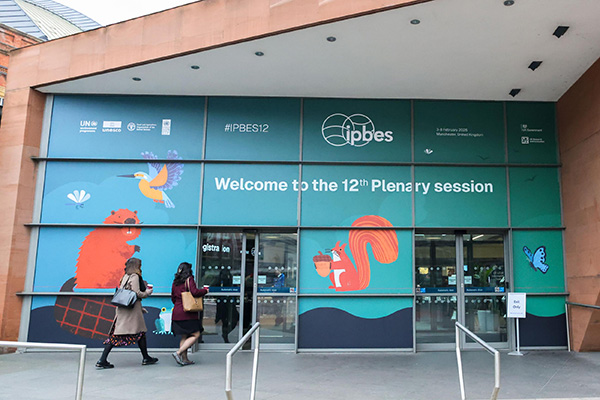
Image 1: Some of the JNCC negotiating team arriving on the first day (photo © IISD/ENB / Anastasia Rodopoulou).

Image 2: View of the main negotiation room (photo courtesy of Tom Raven, Defra).
Why should businesses care about biodiversity?
All businesses depend on biodiversity, from the raw materials required to create products or infrastructure, to the protection provided from extreme weather events such as flooding. Biodiversity loss is a critical systemic risk for all businesses, threatening the entire global economy and wellbeing of society. The UK Government’s National Security Assessment classifies ecological collapse as a ‘critical national security risk’, whilst the World Economic Forum’s Global Risks Report 2026 ranks biodiversity loss and ecosystem collapse as the second most severe global risk over the next 10 years.
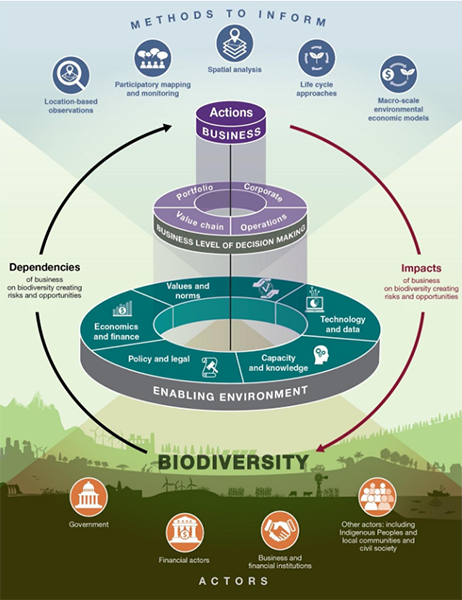
Image 3: Overview of the Business and Biodiversity Assessment (image © IPBES).
Despite this, global public and private finance flows with direct negative impacts on biodiversity were estimated at $7.3 trillion in 2023, compared to just $220 billion directed towards conservation and restoration activities, according to the new IPBES assessment. Why? Most businesses do not understand their biodiversity-related risks or impacts, and the current system does not incentivise them to take action to minimise biodiversity loss.
Whilst this new assessment diagnoses the problem, it also provides a set of actions businesses can take now to address their impacts and dependencies on biodiversity. These range from complying with biodiversity related policies and regulations, to monitoring biodiversity impacts and mapping value chain actors to ensure traceability (for example through the GIEC indicator). However, businesses cannot act alone, and the assessment also outlines actions required to create an enabling environment, where business interests are aligned with what is beneficial for biodiversity and society. Creating an enabling environment involves changes in policy, legal and financial systems, as well as our values, norms and culture. Crucially, collective, transformative actions are needed not just from business, but also from government, financial actors and wider society.
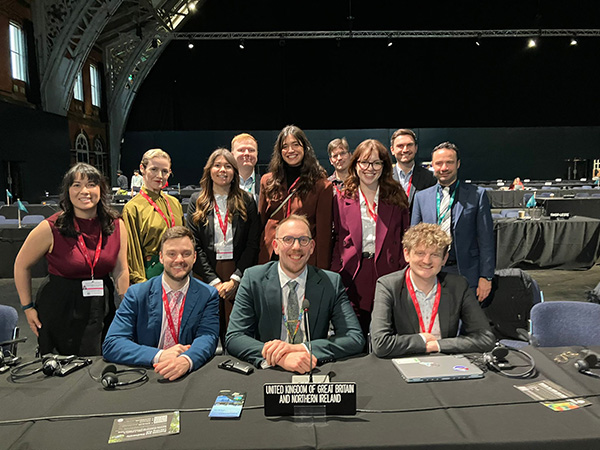
Image 4: The UK delegation team, including JNCC and Defra colleagues (photo courtesy of Matt Casey, Defra).

Image 5: Defra and JNCC colleagues consult during the negotiations (photo © IISD/ENB / Anastasia Rodopoulou).
What’s next for the assessment?
After a long week of negotiations, we left IPBES-12 with an evidence-based, policy-relevant summary that could have fundamental implications for bending the curve on biodiversity loss. But now we need action. The assessment will form the basis of new international and national goals, policies and regulations, as well as providing a roadmap for businesses to reduce their biodiversity impacts and risks. JNCC will now work with key partners, including the UK Business and Biodiversity Forum and Defra, to determine what actions could be taken in the UK to implement the findings of the assessment. Importantly this will require cross-sectoral collaboration with the likes of HM Treasury, the Department for Business and Trade, and the Department for Energy Security and Net Zero to co-develop tangible actions and create the enabling environment for business to act. This will build on JNCC’s ongoing work to improve cross sectoral collaboration and implement the findings of the IPBES Nexus and Transformative Change Assessments – you can learn more about that in our recently published report.
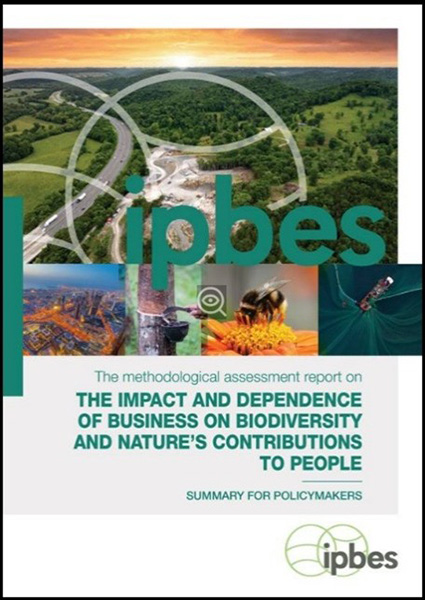
Image 6: Front cover of the Business and Biodiversity Assessment (image © IPBES).
Did they discuss anything else at IPBES-12?
Whilst the Business and Biodiversity Assessment was centre stage at IPBES-12, there was a whole other, admittedly smaller, room devoted to discussing the rest of the agenda. Delegates welcomed an external review aimed at strengthening the operational effectiveness of IPBES and agreed on several new workplans related to building capacity, strengthening knowledge foundations and supporting policy. These included activities to enhance recognition of Indigenous and local knowledge systems in the work of IPBES.
Members also discussed potential topics for new IPBES assessments: pollution, climate change, poverty and cities. Many members were in support of a pollution assessment, being the one direct driver of biodiversity loss not yet comprehensively covered by an IPBES assessment. However, following parallel discussions on the sustainability of the IPBES budget and recent shifts in IPBES membership (the US formally withdrew from IPBES ahead of IPBES-12), the decision was tabled for the next plenary meeting.
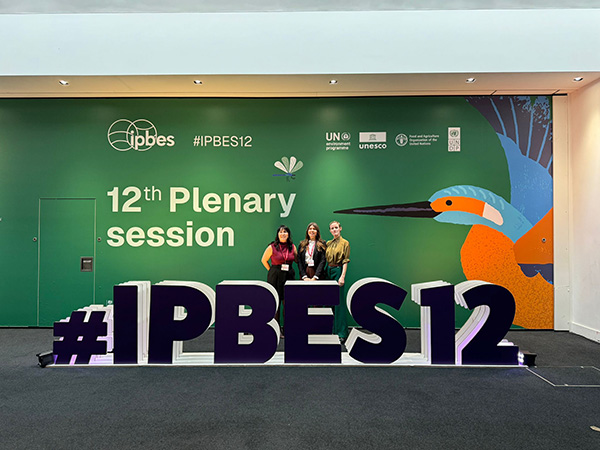
Image 7: Part of the JNCC delegation team (photo courtesy of Hayley-Bo Dorrian-Bak, JNCC).
What’s next for IPBES?
There are currently three other IPBES assessments in preparation:
- The monitoring assessment (IPBES-13, 2027) – a report on monitoring biodiversity and nature’s contributions to people, which will update on progress towards meeting the goals and targets of the Kunming-Montreal Global Biodiversity Framework (KM-GBF).
- The spatial planning and connectivity assessment (IPBES-13, 2027) – a review of the use and change in use of land, inland waters and sea that will provide options to improve planning for effective conservation, restoration and sustainable use of biodiversity.
- The second global assessment (IPBES-14, 2028) – a report on the current state of biodiversity and nature’s contributions to people, including an assessment of progress towards meeting the Sustainable Development Goals and KM-GBF goals and targets. Importantly, the assessment will also identify pathways towards meeting these global goals.
You can sign up to the UK IPBES Stakeholder Network to stay up to date with all the latest activities and opportunities under IPBES.
Published: