
This project will build the skills, tools and frameworks needed for the Cayman Islands Department of Environment (DoE) to map and monitor the extent and condition of terrestrial habitats using advanced Earth Observation (EO) methods. This will support more efficient, evidence-based decision making for biodiversity conservation, and help address pressures such as development, habitat loss, invasive species and climate change.
Background
The Cayman Islands require a robust, repeatable and cost-effective framework to monitor the condition of their unique terrestrial habitats inside and outside protected areas. Existing mapping methods rely on manual digitisation, which is time-consuming and limits the frequency and scale of updates. At the same time, the islands are facing growing threats including land-use change, habitat degradation and fragmentation, more intense storms and invasive species.
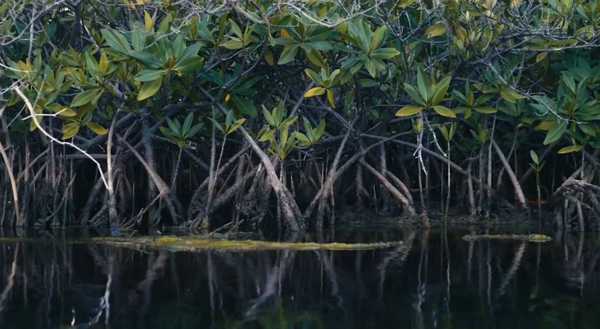
Forests and other land-based habitats in the Cayman Islands span a wide range of types, from the distinct dry forests found on each island, to seasonally flooded Royal Palm forests and extensive mangrove forests dominated by different mangrove species. They also include dry and coastal shrublands (some now heavily affected by invasive plants), mangrove shrublands, low-growing dwarf shrublands on rocky ironshore coasts, and small but important natural herbaceous communities such as sedge and grass wetlands and tidally flooded succulent vegetation.
This project will also support delivery of the UK Government’s Environmental Improvement Plan, particularly development of the K4 terrestrial protected area condition indicator for the UK Overseas Territories and contributes to multilateral environmental agreements such as the Convention on Biological Diversity and the Ramsar Convention.
Cayman is well placed for this work, with existing field data, an established vegetation classification and specialist expertise in forest ecology and GIS within DoE.
Overall aim
To equip the Cayman Islands with the skills and Earth Observation-based tools needed to map and monitor the condition of terrestrial habitats, enhancing biodiversity conservation and helping to mitigate negative anthropogenic impacts and climate change.
Key objectives
Enable DoE to apply advanced EO methods to routinely assess and monitor habitat extent and vegetation condition across the islands.
Produce a robust baseline terrestrial habitat map using Natural England’s ‘Living Maps’ approach, integrated into DoE’s assessment and monitoring systems.
Develop and pilot an EO-based vegetation condition assessment framework for key habitats, providing a baseline condition map and practical monitoring approach.
Strengthen technical capacity within DoE through targeted training and “learning by doing”, enabling staff to run and maintain R-based workflows for mapping and condition assessment.
Share methods, tools and lessons learned through guidance, publications and engagement activities, supporting potential scale-up to other UK Overseas Territories and the wider Caribbean.
What we are doing
The project is organised around four main areas of work.
1: Building technical capacity in the Cayman Islands Department of Environment
Training for DoE staff in EO-based habitat mapping and vegetation condition assessment, focused on running and maintaining R scripts and associated workflows.
At least five DoE staff will be trained to generate detailed habitat maps and to apply condition assessment methods for future monitoring.
Capacity development will follow a “learning by doing” model, with monthly remote technical sessions of the Project Working Group, supported by at least one in-person visit. Capability surveys at the start, mid-point and end of the project will track progress.
2: Baseline terrestrial habitat mapping
Adapting Natural England’s ‘Living Maps’ approach for the Cayman Islands, using advanced segmentation and machine-learning techniques to generate a detailed habitat map.
Using Natural England’s R scripts alongside available Sentinel-1, Sentinel-2, and purchased high resolution EO data, and other spatial datasets to derive informative indices and spatial predictor variables.
Testing different image segmentation methods (eCognition and ArcPro) to identify the most effective and cost-efficient approach.
Producing a baseline terrestrial habitat map by Year 2, with classification accuracy and uncertainty assessed using statistical metrics, validation data and expert review by DoE.
3: Vegetation condition assessment
Reviewing existing international practice on EO-based condition indicators to inform the design of a tailored approach for the Cayman Islands.
Working with DoE to select key vegetation types and define condition classes for testing, supported by targeted field and drone data collection to supplement existing datasets.
Testing relationships between ground-based condition data and remotely sensed indices across seasons and identifying thresholds that best distinguish condition classes.
Producing mapped outputs of condition categories for key habitats, validating them with DoE expert knowledge, and co-developing a practical condition indicator framework and associated R-based tool.
4: Knowledge management and engagement
Preparing two technical user guides (for the habitat mapping and condition assessment components) with annotated R code, enabling full replication and future training within DoE.
Producing and submitting an open-access peer-reviewed paper to share methods and findings with the wider scientific and policy community.
Developing a project landing page on the JNCC website to host technical outputs, blogs and recorded webinars.
Delivering targeted engagement activities, including:
Presentations to the Governor’s Office and relevant Government Departments.
At least three blogs (launch, mid-project and final), with associated social media posts.
A public “Habitat Fest” event on Earth Day 2027, featuring booths, talks, videos and activities highlighting Cayman’s habitats and their threats.
At least five school presentations and the development of educational resources such as infographics, pull-up banners, ecosystem cards and explainer videos.
International webinars to share lessons with other Overseas Territories and at the Islands Innovation Summit.
Anticipated impact
By the end of the project, the Cayman Islands will have:
A tried-and-tested, EO-based habitat mapping approach integrated into DoE’s assessment and monitoring systems, enabling rapid and repeatable updates.
A preliminary vegetation condition assessment framework, including baseline condition maps for selected habitats and a practical tool for long-term monitoring.
Enhanced institutional capacity within DoE to run these methods independently, underpinning evidence-based conservation actions such as identifying habitat loss or gain, prioritising areas for protection and targeting management interventions.
Improved ability to report against national priorities, natural capital accounting, UK 25YEP indicators and international biodiversity commitments.
The project will also provide a proof-of-concept for applying the Natural England ‘Living Maps’ approach and EO-based condition assessment in a UK Overseas Territory, supporting future scale-up to other territories and the wider Caribbean region.
News and more information
More details about this project including full application and progress reports (when available) will be published on the funder website
https://darwinplus.org.uk/project/DPLUS222/
Please check here for links to news items as the project evolves.
Partners
Cayman Islands Department of Environment (DoE): Lead partner in the territory, providing staff time, collected and existing local data, field knowledge and in-kind support for training, validation and public engagement.
Joint Nature Conservation Committee (JNCC): Lead organisation, providing EO and indicator expertise, project management, training and technical support.
The project will also work closely with:
Natural England: Providing the latest R code and technical advice for the ‘Living Maps’ approach, and in-kind support for troubleshooting.
And in the Cayman Islands we will work with Governor’s Office, relevant Cayman Islands Government departments, the National Trust, schools, civil society and other UK Overseas Territories stakeholders through engagement and outreach activities.
This project is funded by the UK Government through Darwin Plus.

Published: